Table Of Content
Universities held a rally at the statue celebrating Beethoven's 196th birthday. Spurred by the popularity of the Peanuts cartoons and his affinity with the Beethoven playing character of Schroeder, Loyola sophomore James Shadduck organized the event. Zubin Mehta, the Phil's musical director, spoke and students held protest style signs with drawings of Snoopy and chanted "Beethoven's alive!" as co-ed Suzanne McKay played the kazoo.
More From the Los Angeles Times

But eventually, after using up almost 10 feet of Beethoven’s hair, they were able to piece together a genome that they could “quiz” for signs of genetic disease, Krause said. Since his death, scientists have long tried to piece together Beethoven’s medical history and have offered a variety of possible explanations for his many maladies. The analysis of his hair was also significant for what it didn’t turn up.
What Beethoven's DNA reveals about his death, health and family - ZME Science
What Beethoven's DNA reveals about his death, health and family.
Posted: Wed, 15 Nov 2023 08:00:00 GMT [source]
SJSU Researchers Study Beethoven's Hair, Unlock New Secrets About His Life, Death
The researchers believe Beethoven’s Hepatitis B infection could have been the driving force behind the composer’s severe liver disease, which would then have been exacerbated by his alcohol intake and genetic risk behaviors. But certainty, in both the timing of the infection and extent of alcohol consumption, remains elusive. Among the several risk factors for liver disease found in Beethoven’s DNA, researchers identified one genetic variant that would have tripled his risk, writes Science News’ Freda Kreier. Historical accounts say the composer was a heavy drinker, which would have made him more vulnerable to liver disease. And the new finding that he had hepatitis B, which can cause liver damage, adds to the evidence. During his lifetime, German composer Ludwig van Beethoven reportedly suffered from a slew of health problems, including hearing loss, gastrointestinal issues and liver disease.
agent@ethanellenberg.com
But when he heard about the Philharmonic's planned Beethoven statue his artist's fire was rekindled. According to Foerster, he suddenly had a vision of Beethoven roaming through the woods (the same woods Foerster claimed to have played in as a child), as he composed his Ninth Symphony. Ludwig van Beethoven (baptized December 17, 1770, Bonn, archbishopric of Cologne [Germany]—died March 26, 1827, Vienna, Austria) was a German composer, the predominant musical figure in the transitional period between the Classical and Romantic eras. A few of Horatio Lord Nelson’s hairs sold for £13,750 at Sotheby’s in 2017.
news Alerts
One of the locks of hair was contributed by the Beethoven Museum in Bonn. The house where he was born in 1770 is now a museum and archive, where scholars have kept examining the composer's legacy since his death in 1827. The key question of what caused Beethoven’s hearing loss is still unanswered, said Ohio State University’s Dr. Avraham Z. Cooper, who was not involved in the study.
These issues included progressive hearing loss, chronic gastrointestinal complaints, and severe liver disease. The researchers used some of the best-preserved locks to reconstruct the composer’s genome. This analysis didn’t uncover any genetic markers for deafness or intestinal issues.
About the study
They were aiming to get a polygenic score—an indicator for an individual’s genetic predisposition for a trait or behavior. These factors, along with his chronic drinking, were probably enough to cause the liver failure that is widely believed to have killed him, according to a study published Wednesday in the journal Current Biology. "Independent analyses of Beethoven's hair show that he had plumbism - or lead poisoning - which could explain his life-long illnesses. It would also have had an impact on his personality and could have contributed to his death," said Walsh. Walsh doubts that lead poisoning caused his deafness, but research continues in that area and it is hoped that there will be results to report within the year. This suggests there was an “extra-pair paternity event” somewhere in the generations before Beethoven was born, Begg said. In other words, a child born from an extramarital relationship is part of the composer’s family tree.
The 15 greatest violin concertos of all time, ranked
The once famous orchestra was, in effect, dissolved after the war of 1778 between Austria and Prussia. But what was only an occasional effect for Mozart and others influenced by the Mannheim composers was to remain a fundamental element for Beethoven. Beethoven may indeed be described as the last and finest flower on the Mannheim tree.
The 15 most famous tunes in classical music
Begg’s work has now shown Beethoven had two copies of a particular variant of the PNPLA3 gene, which is linked to liver cirrhosis. He also had single copies of two variants of a gene that causes haemochromatosis, a condition that damages the liver. The eighth lock yielded too little DNA to be declared authentic or otherwise. Working with the ancestry firm FamilyTreeDNA, we traced the ancestry for this person to western-central Europe. We are confident it is Beethoven, since two of the locks exist alongside uninterrupted provenance records going as far back as the 1820s.
Beethoven also suffered from gastrointestinal issues and a deteriorating liver. That faulty organ is thought to be responsible for the composer’s skin reportedly turning yellow in the summer of 1821. Scientists used five locks of hair collected during Beethoven’s lifetime to reconstruct the composer’s genome.
The complete lack of mercury in the hair is a strong indication that Beethoven did not have syphilis, as some had theorized; in the 1820s it would have been treated with mercury compounds. No evidence of drug metabolites turned up either, indicating that Beethoven avoided opiates despite the pain he suffered in his later years, probably to keep his mind clear for composing. On April 27th, 1810, renowned composer Ludwig van Beethoven reached a significant milestone in his illustrious career by completing his composition Für Elise. This solo piano piece, known for its graceful melody and delicate arpeggiated chords, has entertained audiences for centuries with its simplicity and beauty. While the exact inspiration behind the piece remains a subject of debate among scholars, it is believed that Beethoven dedicated Für Elise to Therese Malfatti, a woman and friend he greatly admired.
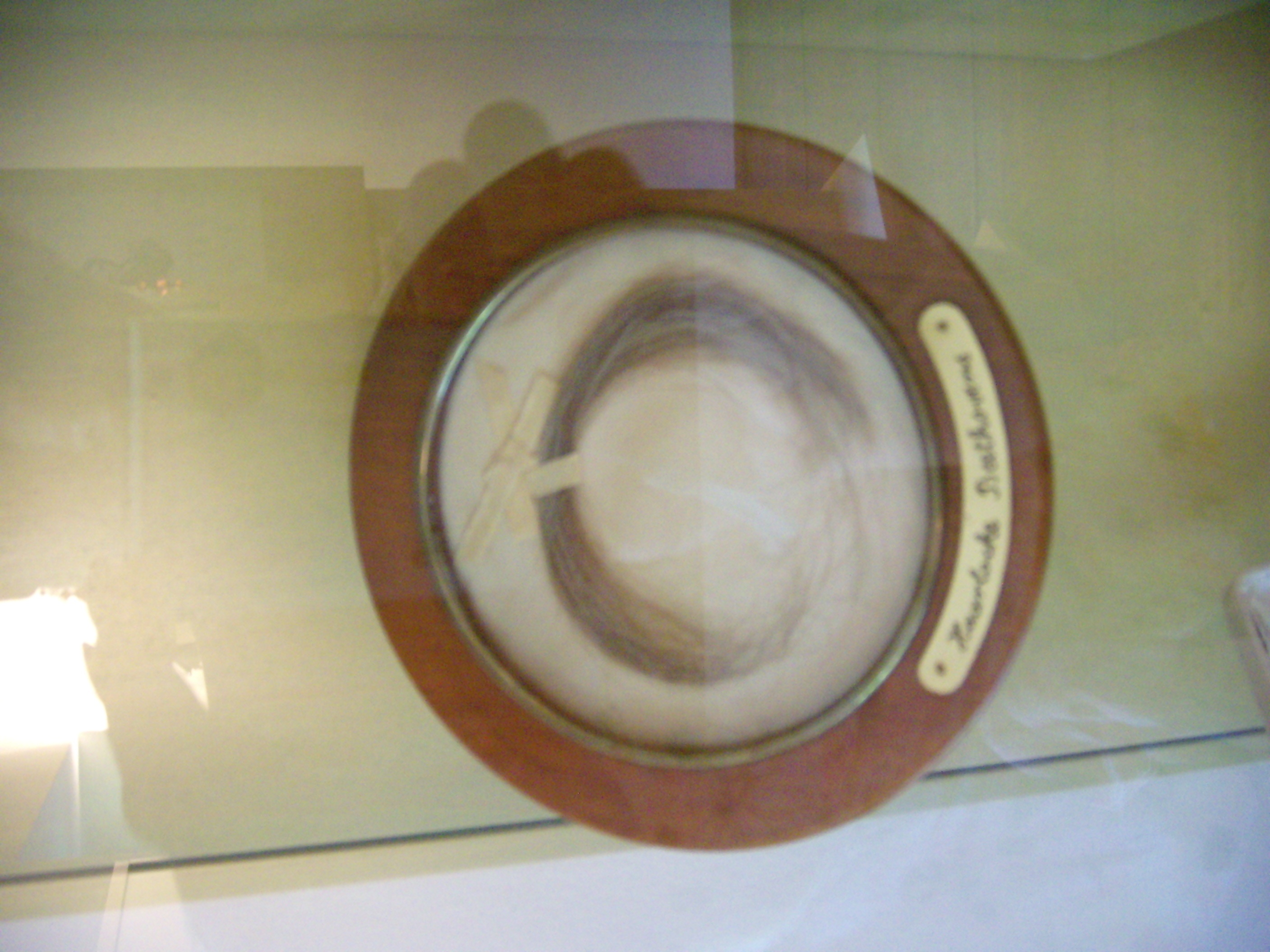
In 1994 it sold for $7,300 U.S. to members of the American Beethoven Society, who in 1996 formed the Beethoven Project to conduct research on the hair. Let us celebrate the genius of Ludwig van Beethoven and the lasting legacy of Für Elise. From its humble beginnings as a private composition to its status as a beloved classic, this masterpiece continues to inspire and enchant audiences, reminding us of Beethoven’s unmatched brilliance and the power of music to transcend time and space.
The researchers worked under the premise that the hair samples were authentic. However, they restricted further analyses to the 1.64 Gb of the genome to map short reads with confidence. Further, they performed principal component analyses (PCAs) on the high-coverage Beethoven genome.
That Beethoven's hair survived into the 21st century is, in itself, a fascinating story that began with a young musician, Ferdinand Hiller, clipping it from Beethoven's head the day after he died. It was then passed from generation to generation of Hillers, and wound up in the hands of a Danish physician, Kay Fremming, who was deeply involved in the effort to save Jews in Nazi-occupied Denmark. It is believed Fremming was given the hair in gratitude for his work on behalf of the Jews.
Dozens of locks attributed to Beethoven are held in public and private collections. Entire books have been written on Beethoven’s health, based on records from the time. However, my colleagues and I approached the topic from a different perspective. "What the study showed was that Beethoven had two sets of genes that predisposed you to have liver disease,” Meredith said.
It’s very challenging to extract and analyse DNA from the remains of a dead person (or other animal) – much more so than from living tissues. Nonetheless, huge technical advances have transformed the field of ancient DNA studies. Sign up for the Nature Briefing newsletter — what matters in science, free to your inbox daily. Intensity of L alpha x-ray fluorescence from a strandard hair compared with Beethoven's hair.Intensity of Lα x-ray fluorescence from a standard hair versus a hair from Beethoven. The archive in the Beethoven Museum was able to keep some of its curls and continues to keep them under lock and key.




No comments:
Post a Comment